 how-to
How to Verify HVAC Technician Certification: A Step-by-Step Guide
Table of Contents
- Why Verifying HVAC Technician Certification Matters
- Understanding HVAC Credential Types and Scope
- How to Check HVAC Contractor License Status
- EPA Section 608 Certification Lookup and Verification
- Questions to Ask an HVAC Contractor About Credentials
- HVAC Contractor Hiring Checklist for Credential Verification
- Red Flags: When Credentials Cannot Be Verified
- Red Flag: No License Number or Refusal to Provide It
- Red Flag: License Shows as Inactive, Suspended, or Revoked
- Red Flag: No EPA Section 608 Certification or Certification Cannot Be Verified
- Red Flag: Certification Card Looks Fake or Damaged
- Red Flag: Testing Organization Has No Record of the Certification
- Red Flag: Unwillingness to Answer Questions About Credentials
- Red Flag: Extremely Low Price Compared to Other Quotes
- Red Flag: No Insurance, Bonding, or Written Warranty
- Red Flag: Negative Reviews Mentioning Licensing or Quality Issues
- What to Do When You Cannot Verify a Credential
- Frequently Asked Questions
Last Updated: October 11, 2026
Why Verifying HVAC Technician Certification Matters
Before hiring anyone to work on your HVAC system, verify HVAC technician certification to protect your home and wallet. Unqualified technicians can damage equipment, create safety hazards, or deliver poor workmanship.
Understanding HVAC Credential Types and Scope
EPA Section 608 Certification is the federal requirement for anyone handling refrigerant. For residential work, a technician needs Type A or Universal certification at minimum.
State HVAC License proves the technician has completed training, passed an exam, and met experience requirements. Licenses typically require renewal every few years.
Trade Certifications from NATE (North American Technician Excellence) show specialized knowledge and are respected in the industry.
How to Check HVAC Contractor License Status
Your state's licensing board maintains a public database. Search online for "[Your State] HVAC contractor license lookup" by name, license number, or company name.
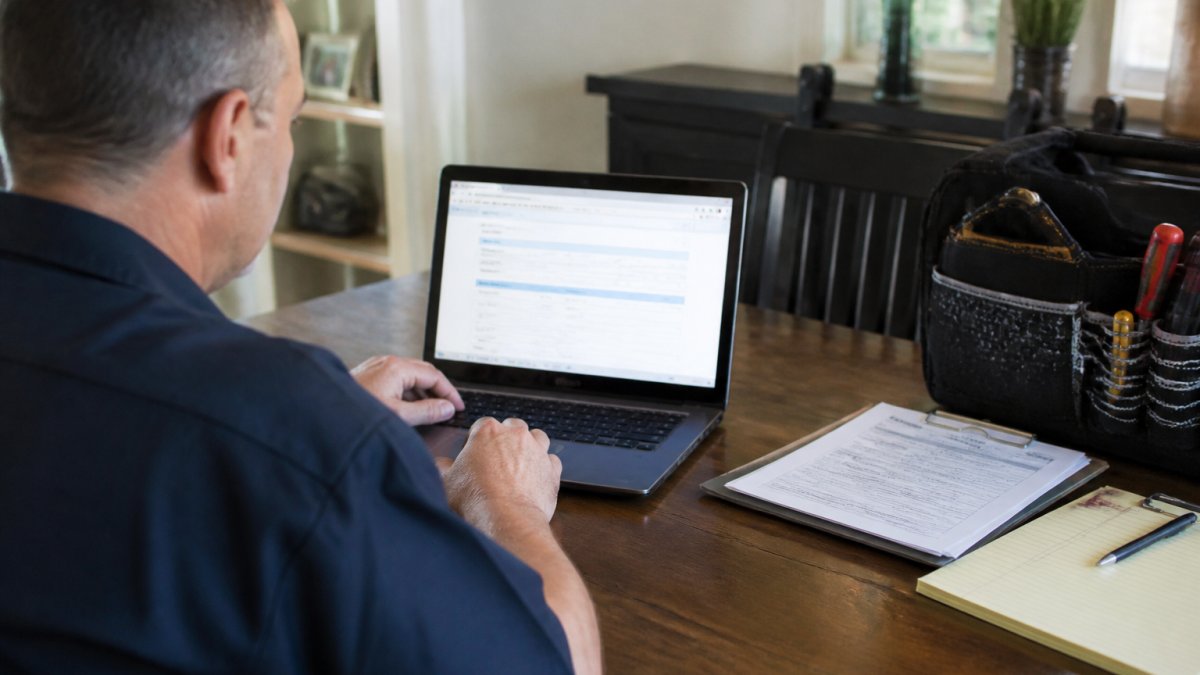
Verify the license is active, not expired, suspended, or revoked. Match the license number to the technician's physical card. Do not hire if the license is inactive or expired.
EPA Section 608 Certification Lookup and Verification
EPA Section 608 certification is the federal credential for handling refrigerant (the EPA). Every technician who touches your air conditioner's refrigerant must have this certification.
Understanding EPA Section 608 Scope
The EPA requires certification for anyone who services, maintains, or repairs appliances containing ozone-depleting refrigerants, including all air conditioning systems.
The four EPA Section 608 types are: Type A (small appliances), Type B (high-pressure systems), Type C (low-pressure systems), and Universal (all types). For residential work, Type A or Universal is required; Universal is ideal.
How the EPA Section 608 System Works
The EPA approves testing organizations to administer exams and maintain records. The four primary organizations are HVAC Excellence (hvacexcellence.org), NATE (nate.org), RSES (rses.org), and ACCA (acca.org). Each maintains its own database; contact the issuing organization directly to verify.
Step-by-Step Verification Process
Request the EPA Section 608 certification number in writing. Verify the physical card includes the technician's name, certification type, number, expiration date, testing organization, and EPA logo. Contact the testing organization to confirm the certification is active, the type matches, and the name matches exactly. Verify expiration date (typically three years). Compare the technician's photo ID to the card and database, all must match exactly.
What to Do If Verification Fails
If verification fails: (1) No record = certification is fake; do not proceed. (2) Expired = not currently certified; hire someone else. (3) Name mismatch = identity fraud; stop work and report to the testing organization and state licensing board. (4) Refusal to provide information = strong indicator they are not certified; do not hire.
Why EPA Section 608 Verification Matters
Improper refrigerant handling damages the ozone layer; the EPA enforces these rules strictly. For homeowners: uncertified work voids warranties, creates legal liability, damages equipment, and violates EPA regulations. When you verify HVAC technician certification, you ensure legal compliance, safety, and warranty protection.
Questions to Ask an HVAC Contractor About Credentials
Ask for: (1) state HVAC license number, (2) EPA Section 608 type, (3) insurance and bonding proof, (4) customer references, and (5) written warranty terms. Verify with official sources.
HVAC Contractor Hiring Checklist for Credential Verification
Use this checklist before you hire anyone to work on your HVAC system:
| Step | Action | Status |
|---|---|---|
| 1 | Get contractor's state license number | ☐ |
| 2 | Verify license in state database | ☐ |
| 3 | Confirm license is active (not expired) | ☐ |
| 4 | Ask for EPA Section 608 certification | ☐ |
| 5 | Verify EPA 608 with testing organization | ☐ |
| 6 | Request proof of insurance and bonding | ☐ |
| 7 | Ask for recent customer references | ☐ |
| 8 | Call at least two references | ☐ |
| 9 | Get warranty terms in writing | ☐ |
| 10 | Compare quotes from at least two contractors | ☐ |
Red Flags: When Credentials Cannot Be Verified
Sometimes your verification efforts hit a dead end. When that happens, trust your instincts and take action. Here are the specific red flags that should stop you from hiring, along with what each one means and what to do next.
Red Flag: No License Number or Refusal to Provide It
What it means: If a technician cannot give you a state license number or says they don't have one, they are not licensed.
What to do: Do not hire them. Ask if they work for a licensed contractor. If they say yes, get the contractor's name and license number and verify it yourself.
Why it matters: An unlicensed technician has no accountability. If something goes wrong, you have no legal recourse. Your equipment warranty may be void.
Red Flag: License Shows as Inactive, Suspended, or Revoked
What to do: Do not hire this technician. An inactive or suspended license means they are not legally permitted to work.
If the license is suspended, you can contact your state's licensing board to ask why. This information is often public.
Why it matters: A lapsed or suspended license is a legal barrier. The technician cannot legally perform HVAC work in your state.
Red Flag: No EPA Section 608 Certification or Certification Cannot Be Verified
What to do: Do not allow this technician to handle refrigerant. If the work requires refrigerant recovery, evacuation, or charging, EPA Section 608 certification is mandatory.
If the technician says they have the certification but the testing organization has no record, ask them to contact the testing organization directly to resolve the discrepancy.
Why it matters: Refrigerant handling is a federal requirement. A technician without EPA Section 608 certification is breaking federal law. This is not a minor credential, it's a legal requirement.
Red Flag: Certification Card Looks Fake or Damaged
What to do: Do not accept the card as proof. Ask the technician to contact the testing organization to provide a replacement or digital certificate.
If the technician cannot obtain a replacement or refuses to do so, the certification is likely fake. Do not proceed.
Why it matters: Fake credentials are a real problem in the HVAC industry. A poorly printed or homemade card is a sign someone created a fraudulent credential.
Red Flag: Testing Organization Has No Record of the Certification
What it means: You contacted the EPA-approved testing organization (HVAC Excellence, NATE, RSES, or ACCA) and provided the technician's name and certification number.
What to do: This is the strongest indicator that the certification is fake. Do not hire this technician.
Why it matters: If the testing organization that supposedly issued the certification has no record of it, the credential is fraudulent.
Red Flag: Unwillingness to Answer Questions About Credentials
What to do: This is a warning sign. A legitimate, professional technician will answer credential questions directly and provide documentation without hesitation.
Ask the question again, clearly and directly. If they still refuse or become hostile, end the conversation. Tell them you've decided to hire a different contractor.
Why it matters: Transparency about credentials is a sign of professionalism and integrity. A technician who is proud of their qualifications will show them off.
Red Flag: Extremely Low Price Compared to Other Quotes
What it means: You've gotten quotes from three contractors. Two are in the $1,500-$2,500 range for an AC installation. One is $800.
What to do: Get at least three quotes before hiring.
If the contractor cannot explain the low price, or if their explanation doesn't make sense, be cautious. Verify their credentials extra carefully.
Why it matters: HVAC work requires proper tools, training, and compliance with codes.
Red Flag: No Insurance, Bonding, or Written Warranty
What it means: You ask the contractor for proof of liability insurance and a surety bond.
What to do: Ask for proof of insurance and bonding in writing.
If they refuse or cannot provide proof, this is a red flag. Do not hire them.
Also require a written warranty. Get it in writing before work begins.
Why it matters: Insurance and bonding protect you financially if something goes wrong. A written warranty shows the contractor is confident in their work.
Red Flag: Negative Reviews Mentioning Licensing or Quality Issues
What it means: You search online for reviews of the contractor. Multiple customers mention unlicensed work, poor quality, unfinished jobs, or refusal to provide credentials.
What to do: Read reviews carefully and look for patterns. One negative review might be a disgruntled customer.
If reviews mention licensing issues specifically, contact your state's licensing board to check if there are any complaints or disciplinary actions against the contractor.
Why it matters: Online reviews are a window into a contractor's real-world performance.
What to Do When You Cannot Verify a Credential
If you encounter any of these red flags and cannot verify a credential, here are your next steps:
-
Stop the work immediately. Do not allow the technician to proceed with any regulated tasks (refrigerant handling, electrical work, gas line work).
-
Contact the issuing authority. If the credential is a state license, contact your state's licensing board. If it's EPA Section 608, contact the testing organization. Explain that you cannot verify the credential and ask them to investigate.
-
Request documentation in writing. Ask the contractor to provide written proof of their credentials (license, certification card, insurance certificate) within 24 hours. If they cannot, assume the credentials are invalid.
-
Postpone the work. Tell the contractor you've decided to hire a different technician. Do not proceed with someone whose credentials you cannot verify.
-
Report the issue. If you suspect unlicensed or fraudulent practice, report it to your state's licensing board or the EPA. Provide the contractor's name, company, and details of the credential issue. The state may investigate and take action.
-
Hire a verified contractor. Start your search again with a contractor whose credentials you can verify through official channels.
Frequently Asked Questions
How can I verify an HVAC technician's certification online?
Start with your state's licensing board website, most states maintain public searchable databases where you can look up an HVAC contractor's license number, status, and any disciplinary history. For EPA Section 608 certification, contact the EPA or check with the certification body listed on the technician's card. Always ask the technician for their license number and certification credentials upfront; legitimate professionals carry these documents and can provide verification details on the spot.
What is the difference between an HVAC license and a certification?
An HVAC license, issued by your state, authorizes a technician to legally perform HVAC work and is required for business operations. Certifications, like EPA Section 608, demonstrate specialized knowledge in refrigerant handling, electrical safety, or other technical areas and are often required by federal law or employer policy. A technician can hold a valid license but lack certain certifications; always verify both credentials match the work you need done.
What should I do if I cannot verify an HVAC contractor's credentials?
Do not hire them. A legitimate contractor will provide verifiable proof of licensure and relevant certifications without hesitation. If they cannot produce documentation or the credentials do not appear in official databases, they may be operating illegally or fraudulently. Contact your state's licensing board or the EPA to report unlicensed activity and continue your search with a contractor whose credentials you can confirm.
Can an HVAC technician work without EPA Section 608 certification?
No. Federal law (the Clean Air Act) requires anyone who handles refrigerants, including technicians who service, maintain, or repair air conditioning systems, to hold EPA Section 608 certification. The only exception is an uncertified apprentice working directly under a certified supervisor. Always confirm your technician holds this certification before they touch your system.