 how-to
Is Fixing Old R-22 HVAC Worth It: A 2026 Guide
Table of Contents
- Understanding Your R-22 System and Why It Matters
- R-22 AC Repair Cost and Refrigerant Recharge Expenses
- R-22 Leak Repair: Detection, Options, and Decision Points
- Repair or Replace Old Air Conditioner: The Decision Framework
- R-22 Phaseout and Refrigerant Availability in 2026
- Long-Term Operating Costs: Repair Versus Replacement
- Questions to Ask Your HVAC Technician Before Deciding
- Frequently Asked Questions
Last Updated: October 18, 2026
Understanding Your R-22 System and Why It Matters
Your air conditioning system's refrigerant is the lifeblood of cooling performance. If your unit uses R-22 (also called Freon), you're dealing with a refrigerant that's becoming increasingly difficult and expensive to source.
R-22 is a hydrochlorofluorocarbon (HCFC) refrigerant that was standard in air conditioning units manufactured before 2010. It works by absorbing heat from inside your home and releasing it outdoors, completing the cooling cycle. The problem: the EPA began phasing out R-22 production in 2004 because it depletes the ozone layer. By 2020, production stopped almost entirely in the United States.
This matters to you because when your R-22 system develops a leak or needs a refrigerant recharge, finding and affording the refrigerant becomes a real challenge. The supply is limited to reclaimed and recycled stock, which drives prices up significantly.
R-22 AC Repair Cost and Refrigerant Recharge Expenses
When your R-22 air conditioner stops cooling effectively, the first suspicion is often low refrigerant. A recharge sounds straightforward, but the cost has changed dramatically since R-22 production ended.
Refrigerant pricing depends on availability and market demand. Because new R-22 is no longer manufactured, technicians must source reclaimed or recycled refrigerant. This supply constraint means prices fluctuate and tend to be substantially higher than they were a decade ago. A single recharge can cost more than many homeowners expect, and that's before labor charges.
The total cost of an R-22 AC repair includes several components:
- Refrigerant itself, variable, depends on current market rates
- Labor to diagnose the system, typically charged per hour
- Labor to perform the recharge, additional service time
- Leak detection (if needed), specialized equipment may apply additional fees
- Any repairs to valves, fittings, or connections, if leaks are found
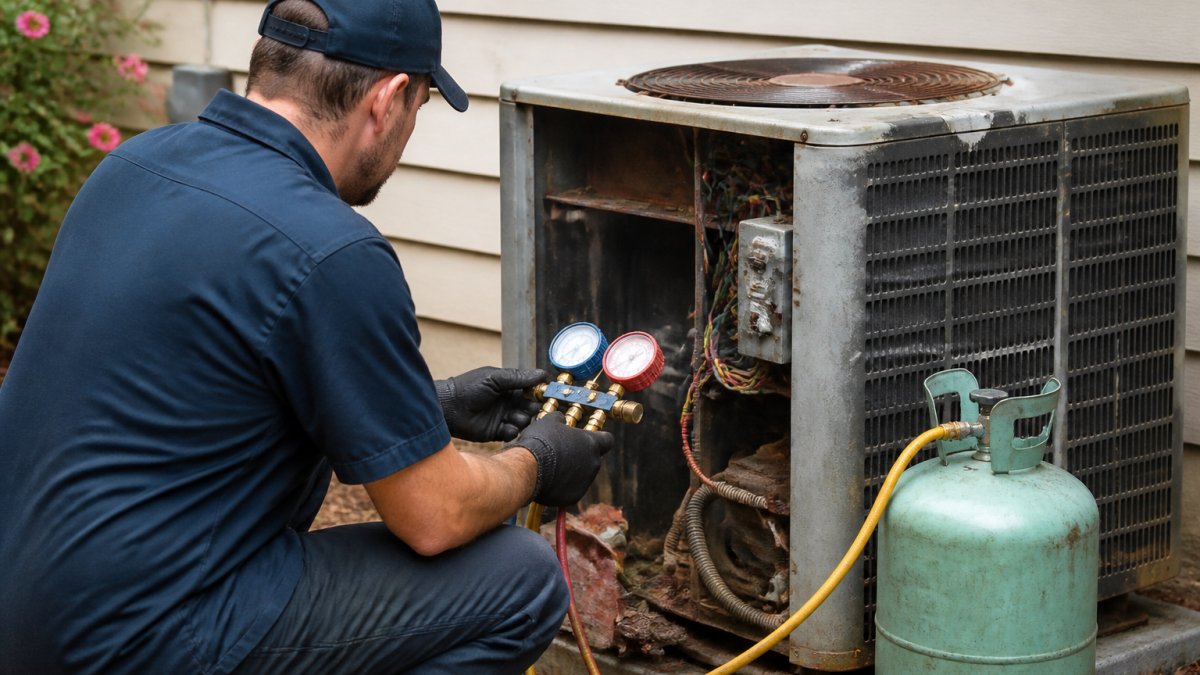
A professional HVAC technician will diagnose why your system is low on refrigerant before simply refilling it. If there's a leak, refilling without fixing the leak is temporary at best. You'll be back in a few months with the same problem.
R-22 Leak Repair: Detection, Options, and Decision Points
A refrigerant leak is the most common reason an R-22 system stops cooling. Detecting and fixing the leak is where the repair-versus-replace decision often becomes critical.
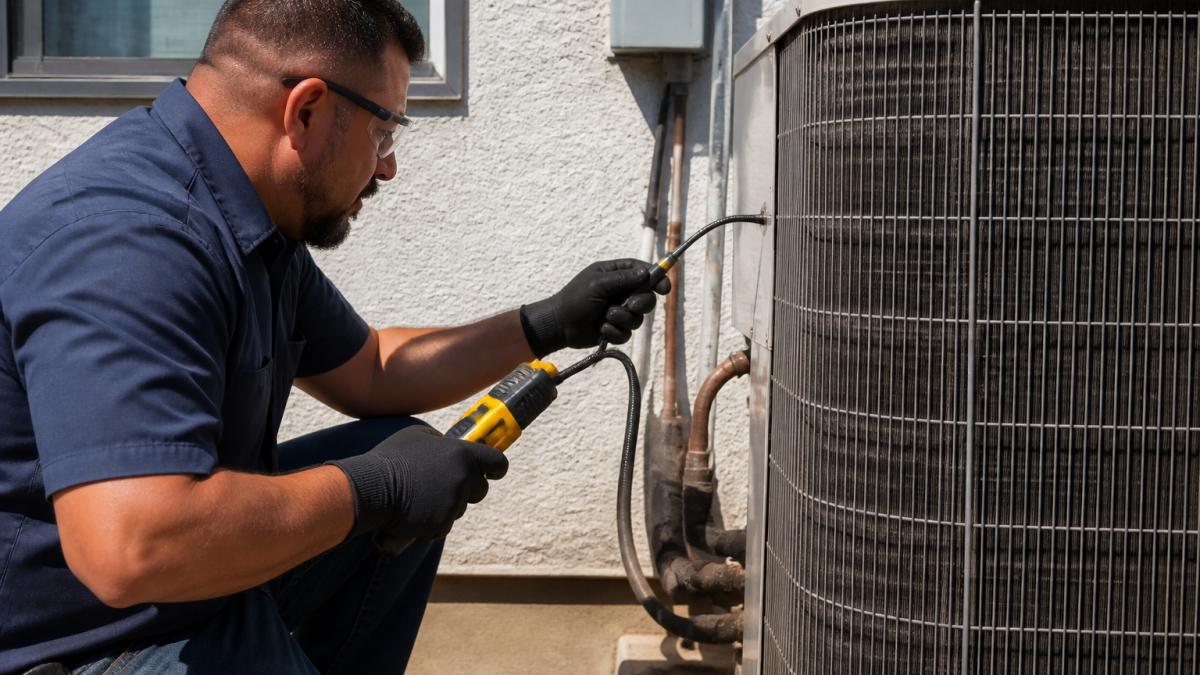
How leaks are detected. Technicians use electronic leak detectors to locate escaping refrigerant. Older systems sometimes develop pinhole leaks in copper tubing or corrosion at connection points.
Repair options for R-22 leaks:
- Seal the leak at the connection point, if the leak is at a valve or fitting, a technician can often tighten or replace that component
- Patch or solder copper tubing, if the leak is in the refrigerant line itself, the technician can repair the tubing
- Replace the evaporator coil, if the leak is inside the indoor coil, repair is usually not possible; the entire coil must be replaced
- Replace the condenser coil, if the outdoor coil is leaking, replacement is the only option
The location of the leak determines both the repair cost and whether repair makes sense at all. A simple connection tightening is inexpensive.
The decision point: If the leak is in a coil (indoor or outdoor), you're looking at a major repair cost. At that point, comparing the cost to a full system replacement becomes essential.
Repair or Replace Old Air Conditioner: The Decision Framework
This is the core question: should you fix your R-22 system or replace it? The answer depends on several interconnected factors. Rather than a single rule, think of it as a weighted decision based on system age, condition, repair costs, and efficiency.
System Age and Expected Lifespan
Most air conditioning systems last 15 to 20 years with proper maintenance. If your unit is approaching or past 15 years old, you're in the later half of its expected lifespan. This doesn't mean it will fail tomorrow, but it does mean you're living on borrowed time.
An older unit is more likely to develop multiple problems simultaneously. You might fix a leak today and face a compressor issue next summer. Each repair extends the system's life slightly, but the cumulative cost of repeated repairs on an aging unit often exceeds the cost of replacement.
Age-based guidance:
- Under 10 years old, repair makes sense for most issues, including leaks and refrigerant recharges
- 10 to 15 years old, repair is still reasonable, but consider replacement if the repair exceeds 50% of a new system's cost
- 15+ years old, replacement is often the smarter choice, especially if the repair is significant
Compressor and Coil Condition
The compressor is your system's engine. If it fails, the system is essentially dead. Compressor replacement is one of the most expensive repairs possible, often costing thousands of dollars. On an aging system, a failing compressor is usually a sign that replacement is the right move.
The evaporator coil (indoor) and condenser coil (outdoor) are equally critical. If either develops a leak that requires replacement, you're looking at substantial costs. Coil replacement on an R-22 system is particularly expensive because the entire coil assembly must be replaced and recharged with reclaimed refrigerant.
A technician can assess the condition of these components during a diagnostic visit. If the compressor is showing signs of wear or if either coil is leaking, get a replacement estimate. Compare that estimate to the cost of a new system.
Energy Efficiency and Operating Costs
Older R-22 systems are significantly less efficient than modern equipment. An air conditioner manufactured in 2005 might have a SEER (Seasonal Energy Efficiency Ratio) rating of 10 or lower. Current systems typically achieve SEER ratings of 16 or higher.
This efficiency difference translates directly to your utility bills. A newer system uses substantially less electricity to achieve the same cooling. Over 10 to 15 years, the energy savings from a new system can offset a significant portion of the replacement cost.
If you're facing a major repair on an aging, inefficient system, calculate the long-term cost of continued operation. Add up the repair cost, plus the higher energy bills you'll pay for the next 5 to 10 years, and compare that total to the cost of a new, efficient system. The new system often wins on total cost of ownership.
R-22 Phaseout and Refrigerant Availability in 2026
The EPA's phaseout of R-22 is now complete. No new R-22 is manufactured in the United States. This is the regulatory reality that makes fixing old R-22 HVAC systems increasingly challenging.
The only R-22 available today is reclaimed or recycled refrigerant recovered from old systems. Supply is finite and shrinking as older units are decommissioned. This scarcity drives prices up and availability down.
What this means for your repair decision: if your system needs refrigerant, you're competing for a limited supply at premium prices.
Some homeowners ask about retrofitting their R-22 system with a newer, legal refrigerant alternative. This is possible in some cases, but it's not a simple swap.
For most homeowners, retrofit is more complicated and expensive than simply replacing the system with new equipment designed for modern refrigerants.
Long-Term Operating Costs: Repair Versus Replacement
The true cost of keeping an old R-22 system running extends far beyond the next repair. It includes energy consumption, maintenance, and the risk of unexpected failures.
Repair scenario: You fix the current problem (recharge, leak repair, or component replacement). You continue operating an aging, inefficient system. Energy bills remain high.
Replacement scenario: You invest in a new, efficient system. Your energy bills drop immediately and stay lower for the next 15 years. Maintenance is minimal.
The math often favors replacement, especially if the current repair is substantial. A new system from a reputable installer typically comes with a warranty on both parts and labor.
At Elisee AC Services LLC, we help homeowners evaluate both paths. We'll give you an honest assessment of your system's condition and a clear estimate for repair versus replacement.
Questions to Ask Your HVAC Technician Before Deciding
Before you commit to either repair or replacement, ask your technician these specific questions. Their answers will give you clarity.
About the current problem:
- What caused this failure or leak? Is it likely to happen again?
- Can this specific problem be repaired, or is replacement of a component necessary?
- If you repair it now, what's the likelihood of another major failure within the next two years?
About the system's condition:
- How old is this unit, and what's its expected remaining lifespan?
- Are there signs of wear on the compressor or coils?
- What's the SEER rating of this system, and how does it compare to modern equipment?
About repair costs and alternatives:
- What's the total cost to repair this problem, including parts and labor?
- What's the cost of a full system replacement with installation?
- What warranty comes with a repair versus a new system?
- Are there financing options available for replacement?
About refrigerant and regulations:
- Is R-22 refrigerant readily available, or is sourcing it difficult?
- What's the current cost of R-22 refrigerant, and is that price likely to change?
- Is retrofit to a newer refrigerant possible for this system?
A good HVAC technician will answer these questions directly and help you understand the implications. If a technician pressures you toward one option without addressing your concerns, get a second opinion.
Deciding whether fixing old R-22 HVAC is worth it comes down to honest numbers and realistic expectations. But if your unit is aging, the repair is substantial, and your energy bills are climbing, replacement often delivers better long-term value.
At Elisee AC Services LLC, our licensed technicians provide honest diagnostics and clear recommendations. We'll help you understand your options and support whatever decision serves your home best. When you're ready to explore your next steps, whether repair or replacement, contact us for a professional system evaluation.
Frequently Asked Questions
Is it worth repairing an old air conditioner that uses R-22?
It depends on three factors: system age, repair cost, and refrigerant availability. If your unit is under 10 years old and the repair costs less than 50% of replacement, repair is usually worth it. For systems older than 15 years or those needing repeated repairs, replacement often makes financial sense. R-22 refrigerant scarcity and rising costs make repair increasingly expensive, so get a technician's assessment of your specific unit's condition before deciding.
How much does it cost to recharge a home AC with R-22?
R-22 refrigerant recharge costs vary based on your system's capacity and local market conditions. Pricing depends on the amount of refrigerant needed, labor time, and whether your technician must first repair a leak. For current pricing and a quote tailored to your system, contact Elisee AC Services LLC online to book an inspection. Avoid choosing a technician based on price alone, ensure they're licensed and provide a detailed diagnosis of why the recharge is needed.
Can an R-22 air conditioner still be repaired?
Yes, R-22 systems can still be repaired, but with important limitations. The EPA phased out R-22 production in 2020, so refrigerant now comes from reclaimed or recycled supplies, making it scarce and expensive. Technicians can still service R-22 units, but availability and cost make repairs less practical for older systems. If your unit has a refrigerant leak or compressor failure, ask your technician whether repair is feasible or if replacement is more cost-effective long-term.
What are the alternatives to R-22 refrigerant?
Modern systems use refrigerants like R-410A, R-32, and other low-GWP alternatives that are more environmentally friendly and widely available. Some drop-in replacements exist, but they may not work optimally in older R-22 equipment and could void warranties. Retrofitting an old R-22 system to use a newer refrigerant is possible but often costly and complex. Replacement with a new, efficient system using modern refrigerant is usually the better long-term solution.