 how-to
How to Lower Energy Bills in Houston: 7 Proven Steps
Table of Contents
- Why Your Electric Bill Is High in Houston
- Set Your Thermostat to Save Energy
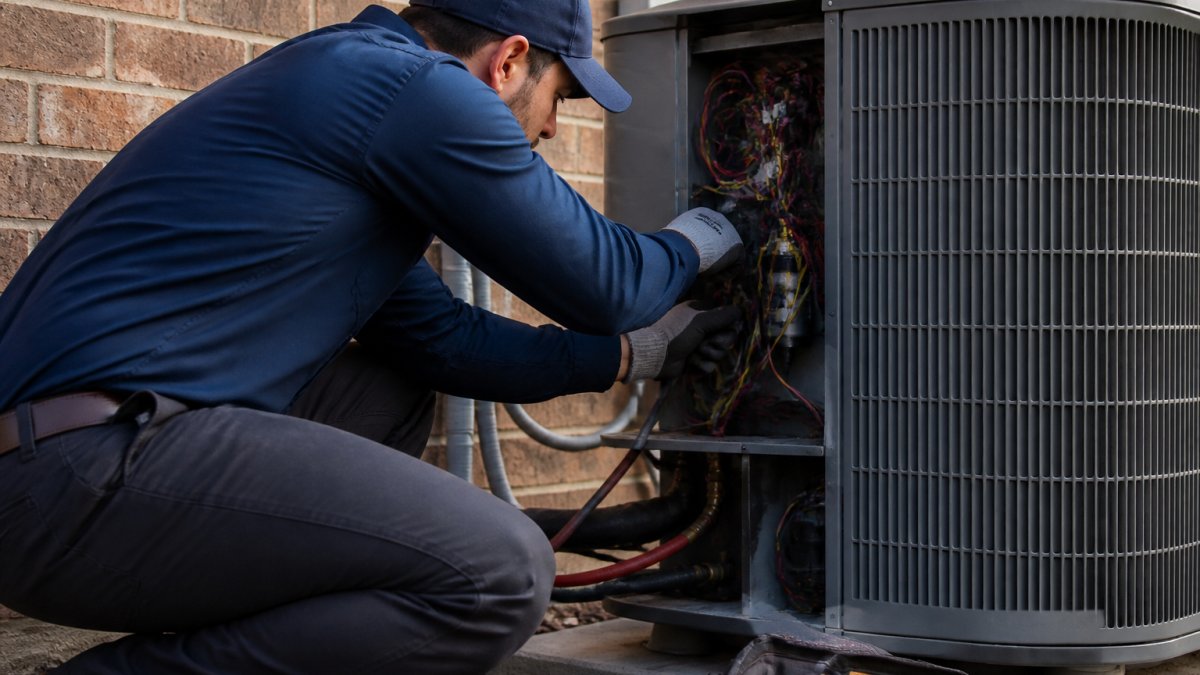
- Schedule HVAC Maintenance to Lower Energy Bills
- Seal Air Leaks and Improve Insulation
- Block Sunlight and Reduce Indoor Heat
- Houston Electricity Rates and Plans
- Quick Wins: Lighting, Appliances, and Standby Power
- Frequently Asked Questions
Last Updated: October 21, 2026
Why Your Electric Bill Is High in Houston
Your electricity bill climbs every summer in Houston as air conditioning runs overtime, but there's more happening than just the weather, and understanding what drives costs is the first step to learning how to lower energy bills.
Houston sits in the Texas deregulated energy market, so your rate depends on which plan you pick and how much power you use.
Cooling accounts for roughly 40-50% of your annual energy bill, and if your thermostat stays at 72°F all day, your costs spike.
At Elisee AC Services LLC, we work with homeowners across the Greater Houston area who want to understand why their bills are so high and what actually works to lower them.
Set Your Thermostat to Save Energy
Your thermostat is the single biggest lever you control for your electricity bill. A programmable or smart thermostat adjusts temperatures automatically based on time of day and occupancy.
Smart thermostat settings for Houston summers:
- Daytime (when you're away): 78-80°F
- Evening (when home): 74-76°F
- Nighttime (sleeping): 76-78°F
- Early morning (before peak hours): 78°F
Peak demand periods in Houston typically run 2-8 PM on weekdays, when your rate can jump 2-3 times higher than off-peak.
Smart thermostats go further: they learn your patterns, adjust for weather forecasts, and connect to your phone for remote changes.
Schedule HVAC Maintenance to Lower Energy Bills
A well-maintained air conditioning system runs efficiently. A neglected one wastes energy and costs more to operate.
Your HVAC system loses efficiency when air filters clog, when ductwork develops leaks, and when the compressor and coils aren't clean.
What regular HVAC maintenance includes:
- Replacing air filters every 1-3 months (more often if you have pets or allergies)
- Cleaning evaporator coils to maintain heat transfer
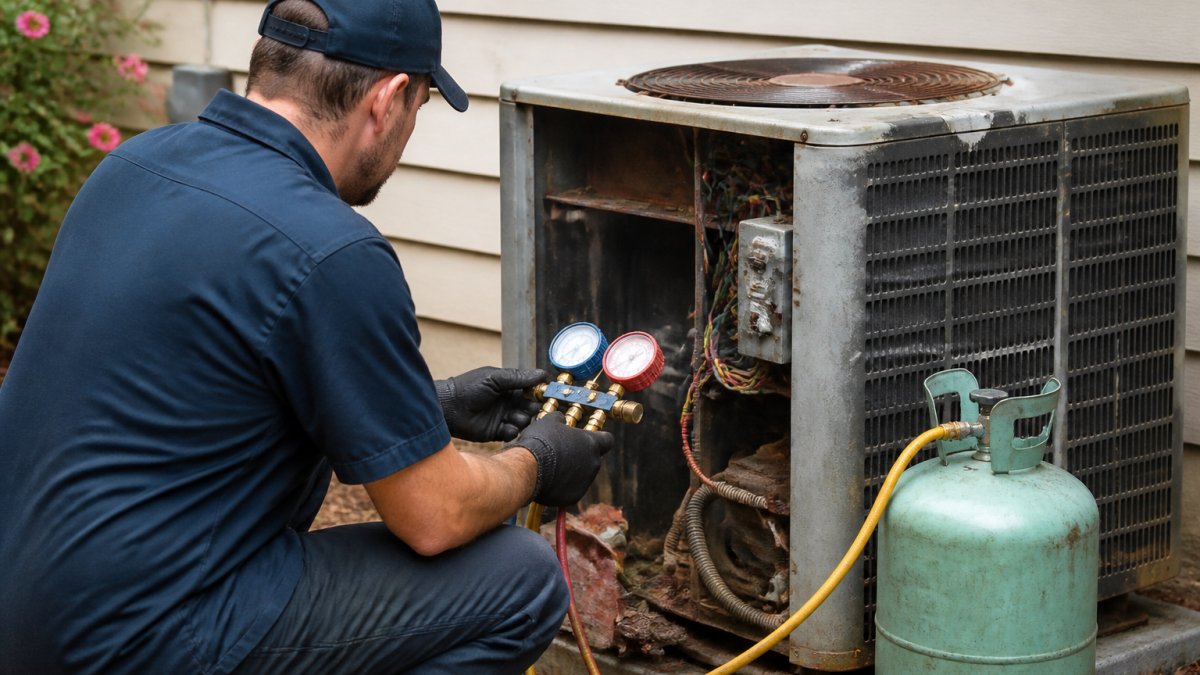
- Checking refrigerant levels and pressures
- Inspecting ductwork for gaps and disconnections
- Lubricating motor bearings
Maintenance should happen twice per year in Houston, once before summer cooling season and once before winter.
When your air conditioning runs efficiently, you use fewer kilowatt-hours per day, which adds up to real savings over a three-month summer.
Seal Air Leaks and Improve Insulation
Cool air escapes through gaps around windows, doors, and where utilities enter your home. Warm outside air leaks in.

Common air leak locations:
- Around window and door frames
- Where pipes and electrical lines enter walls
- Gaps in attic access panels
- Cracks in exterior walls or foundation
- Poorly sealed ductwork in unconditioned spaces
Attic insulation matters too: heat radiates down from your roof into living spaces, and proper insulation (R-30 to R-60 depending on your area) slows that transfer.
Air sealing and insulation reduce the load on your air conditioning system, so it works less and you use less electricity.
Block Sunlight and Reduce Indoor Heat
Solar heat through windows is a major driver of cooling costs in Houston. Direct sunlight heats your home's interior.
Effective ways to block sunlight:
- Install exterior shading (awnings, shade screens, or solar screens)
- Use thermal-lined curtains or cellular shades indoors
- Apply reflective window film to south and west-facing windows
- Plant trees or shrubs to shade windows and exterior walls
Exterior shading is most effective because it blocks heat before it enters your home.
Ceiling fans don't lower temperature, but air movement feels cooler, letting you raise your thermostat a few degrees without sacrificing comfort.
The payback: Reducing solar heat gain by 20-30% through shading can lower cooling energy use by 10-15%, meaningful monthly savings on a typical Houston summer bill.
Houston Electricity Rates and Plans
Texas has a deregulated energy market, so you choose your electricity provider and rate plan, unlike most of the country, where one utility controls everything. That choice is also where many households leave money on the table, because the headline rate on a plan's fact sheet is rarely the rate you actually pay.
Read your bill before you shop
A Texas residential electricity bill has two main pieces, and they are billed by different companies:
- Supply (energy) charges, what your retail provider charges per kilowatt-hour (kWh), plus any base or minimum-use charges. This is the part you shop for.
- Delivery (TDSP) charges, what the local wires utility charges to move power to your home. These are regulated, passed through by your provider, and are the same no matter which retail plan you pick. You cannot shop your way out of them.
Compare the all-in rate (supply plus delivery), not just the supply rate, a plan advertising a low energy charge can still cost more once base and delivery charges are added.
Compare at your real usage, not the headline rate
Electricity plans in Texas are priced at specific usage levels, commonly 500, 1,000, and 2,000 kWh per month, and the advertised rate is usually the rate at just one of those levels. A plan that is cheapest at 2,000 kWh may be among the most expensive at 500 kWh.
Before you shop, pull your last 12 months of bills and note your monthly kWh. Then compare plans at the usage level closest to your actual summer and winter months, not the annual average. Check these on every plan's Electricity Facts Label (EFL):
- Bill credits, many plans advertise a low rate that only applies if you hit a usage threshold (for example, a credit at 1,000 kWh). Use slightly less and the credit disappears, and your effective rate jumps.
- Minimum-use fees, some plans charge a fee if you use less than a set amount per month. In a mild month, a low-usage household can pay more than the rate suggests.
- Base charges, a flat monthly fee that raises your effective rate most at low usage.
- Contract term and early termination fee, a 12-month fixed plan and a 36-month fixed plan carry different risk if you move or if market prices fall.
- Fixed vs. variable vs. time-of-use, fixed locks a price per kWh for the term; variable floats monthly and can spike in summer; time-of-use charges more during peak hours and rewards shifting usage.
Match the plan to how you actually use power
- High summer usage, predictable schedule: a fixed-rate plan with a competitive rate at your summer usage level gives you budget certainty.
- Low usage or a small apartment: watch minimum-use fees and base charges; a plan with a low base charge often beats a lower headline rate.
- Flexible schedule and willing to shift laundry, dishwashing, and EV charging off peak: a time-of-use plan can pay off, but only if you consistently move load out of the 2-8 PM window.
Shop annually, and especially before summer cooling season begins. According to the Public Utility Commission of Texas, you can compare available plans and switch providers, and switching generally does not require a penalty unless you are breaking a fixed-term contract. Read the EFL for every plan before you enroll, it is the document that discloses the actual rate, fees, and credits.
Quick Wins: Lighting, Appliances, and Standby Power
Not every energy fix requires new equipment or a property modification. The actions below are renter-friendly, low-cost, and reversible, start at the top and work down.
Renter-friendly, no-install actions
- LED bulbs: Replace incandescent and CFL bulbs with LEDs. LEDs use roughly 75% less energy than incandescent bulbs and last many times longer. Keep the old bulbs and swap them back when you move if you want to take your LEDs with you.
- Unplug standby loads: Cable boxes, game consoles, chargers, and coffee makers draw power even when idle. Put entertainment systems and chargers on a power strip and switch the strip off when not in use.
- Adjust the water heater: If you have access to the tank, set it to 120°F. Many renters can do this with the landlord's permission; it is a dial, not a repair.
- Cold-water laundry: Wash in cold water and run full loads. Most of a washer's energy use goes to heating water.
- Air-dry dishes and clothes: Skip the heated dry cycle on the dishwasher and use a drying rack or clothesline when possible.
Low-cost upgrades worth doing
- Weatherstripping and door sweeps: Seal gaps around doors and windows. Materials are inexpensive and the work is reversible.
- Outlet and switch plate gaskets: Cheap foam gaskets behind exterior-wall outlets cut drafts.
- Water heater tank and pipe insulation: An insulating blanket and pipe wrap reduce standby heat loss; check with the landlord first.
- Smart power strips: These cut standby power automatically and are easy to take with you.
Quantified savings, and the assumptions behind them
Savings depend heavily on your home, rate, and habits, so treat the ranges below as planning estimates, not guarantees. They assume a typical detached single-family home, a rate in the range commonly seen on Texas fixed plans, and average occupancy.
| Action | Upfront cost | Effort | Estimated annual savings | Payback |
|---|---|---|---|---|
| LED bulbs | $30-$80 for a whole home | Low | $20-$60 | Under 1 year |
| Smart power strips / unplugging | $20-$40 | Low | $10-$40 | Under 1 year |
| Lower water heater to 120°F | $0 | Low | $30-$80 | Immediate |
| Weatherstripping and door sweeps | $20-$60 | Low-medium | $50-$150 | 1-2 years |
| Water heater blanket and pipe wrap | $30-$60 | Low-medium | $20-$50 | 1-2 years |
| Ceiling fan use with higher thermostat setpoint | $0 (if fans exist) | Low | $50-$150 | Immediate |
Actual savings scale with what you currently spend on cooling, water heating, and standby loads, and with your rate: a household already using LEDs and a newer water heater will see less; an older home with incandescent bulbs and an uninsulated tank will see more.
Rebates, assistance, and weatherization programs
Before you pay out of pocket, check whether you qualify for help:
- Utility and retail-provider efficiency programs: Many Texas utilities and retail providers offer rebates on LEDs, smart thermostats, and HVAC tune-ups. Check your provider's website and your wires utility's efficiency page.
- Federal tax credits: Qualified high-efficiency HVAC equipment, insulation, and windows may be eligible for federal energy efficiency tax credits. Confirm current eligibility and caps before you buy.
- Weatherization assistance: Income-qualified households can apply for weatherization assistance that covers air sealing, insulation, and related repairs at low or no cost. Apply through your state or local weatherization office.
- LIHEAP (Low Income Home Energy Assistance Program): Provides bill-payment and crisis assistance for eligible households. Apply through the state-administered program.
Start with the zero- and low-cost items. Each one reduces your electricity consumption, and together they can meaningfully lower your bill without a major purchase or a property modification.
Frequently Asked Questions
What uses the most electricity in a home?
Air conditioning and heating account for 40-50% of household electricity usage in homes with central HVAC systems. Water heaters, refrigerators, and lighting make up most of the remainder. In Houston's climate, cooling costs spike during summer months when outdoor temperatures consistently exceed 90°F. Reducing thermostat usage and maintaining your HVAC system are the fastest ways to cut overall consumption.
Does adjusting the thermostat really lower energy bills?
Yes. Raising your thermostat by 7-10°F for 8 hours per day can reduce cooling costs by 10-15% annually. Programmable and smart thermostats automate these adjustments, so you don't have to remember. Setting your system to 78°F when home and 82°F when away balances comfort with savings. Even small shifts compound across summer months when air conditioning runs continuously.
Can HVAC maintenance help reduce electricity costs?
Absolutely. A clogged air filter forces your system to work harder, increasing energy consumption by 5-15%. Annual maintenance includes filter replacement, coil cleaning, and refrigerant level checks, all of which restore efficiency. Dirty ductwork and worn components also waste energy. Regular maintenance by a licensed technician catches these issues before they spike your bill.
How can I lower my electric bill during a hot summer?
Combine multiple strategies: raise your thermostat to 78°F indoors, close blinds during peak sun hours (10 AM to 4 PM), run ceiling fans to improve air circulation, and schedule HVAC maintenance before June. Seal air leaks around doors and windows, upgrade to LED lighting, and unplug devices not in use. Compare your electricity plan to ensure you're not on a variable-rate option during high-demand periods when rates spike.