 how-to
Emergency AC Repair Response Time: What to Expect
Table of Contents
- What to Do When Your Air Conditioner Stops Working
- AC Emergency Troubleshooting: Safe Steps You Can Take
- Understanding Emergency AC Repair Response Times
- Same-Day AC Repair: What It Really Means
- Questions to Ask an AC Repair Company Before They Arrive
- What to Do While Waiting for a Technician
- Frequently Asked Questions
Last Updated: October 12, 2026
What to Do When Your Air Conditioner Stops Working
When your AC stops during a heat wave, safety comes first. Before calling for emergency AC repair response time service, take these steps.
Immediate safety checks
Turn the thermostat off, wait five minutes, then back on; a reset sometimes restores function.
Next, inspect your air filter. A clogged filter restricts airflow and can trigger a safety shutdown; if it looks dark or blocked, replace it.
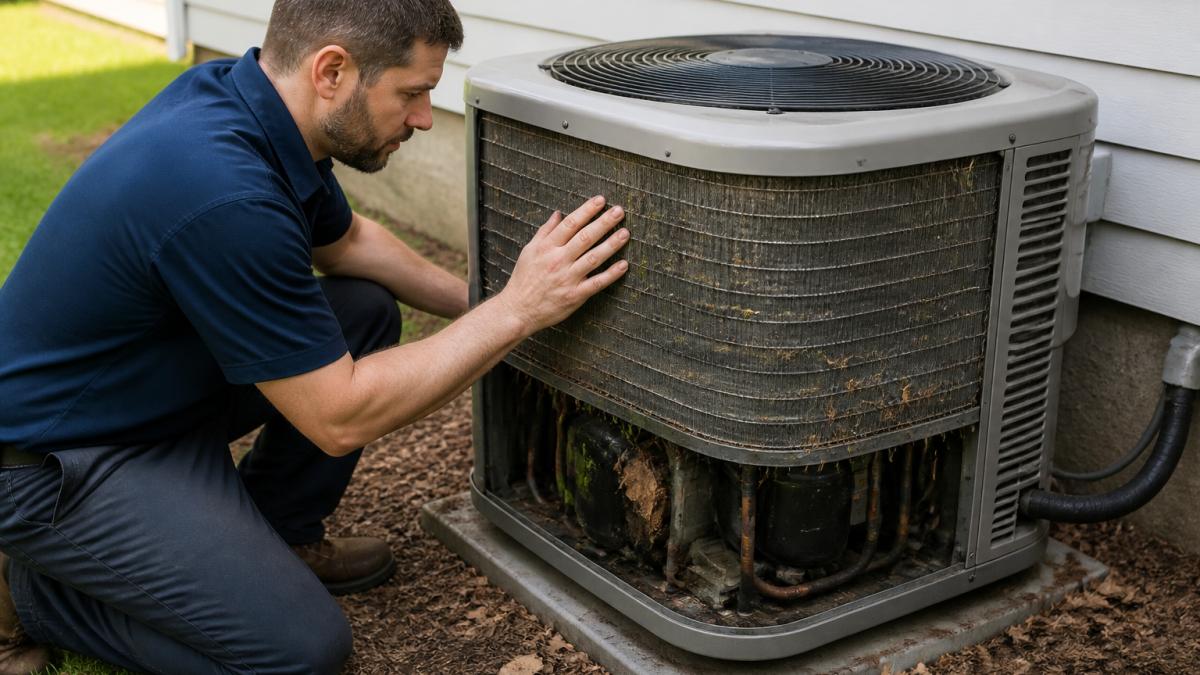
Check your outdoor unit from a safe distance for leaves, branches, or grass clippings blocking the fins.
Finally, verify your thermostat is set to "cool" and lower than room temperature.
When to call for emergency service
If these checks don't restore cooling, call for emergency AC repair.
Call immediately for refrigerant leaks (oily residue around the outdoor unit), water pooling near the indoor air handler, or a burning smell from your vents.
Also call if your system cycles rapidly without cooling, or if replacing the filter and resetting the breaker didn't help.
AC Emergency Troubleshooting: Safe Steps You Can Take
Before an emergency AC repair response time technician arrives, you can safely troubleshoot common issues in 10-15 minutes, helping them work faster.
Check the thermostat and circuit breaker
Confirm your thermostat is in "cool" mode and set at least two degrees below room temperature. Replace batteries if it's battery-powered, since dead batteries often mimic system failure.
Inspect the outdoor unit and airflow
Walk around your outdoor unit and remove visible blockages.
Inside, check all return air vents and make sure furniture, curtains, or closed doors aren't blocking them. Blocked returns reduce airflow and can trigger a safety shutdown.
Feel the air from your supply vents. Warm air means the system runs but isn't cooling, suggesting a refrigerant leak or compressor issue.
Understanding Emergency AC Repair Response Times
When you call for emergency AC repair response time service, the number you hear is rarely a single promise but one of several clocks running at once. Knowing which clock a dispatcher is quoting is the difference between a calm wait and a frustrating one.
The five clocks inside a "response time"
Most companies collapse several stages into one vague number. A call actually moves through five stages, each with its own realistic range:
- Call-back time. How long until a dispatcher returns your call. Minutes during business hours; an hour or more overnight and during heat waves if the queue is backed up.
- Dispatch time. When your call is assigned to a technician and added to their route. This can happen quickly even when arrival is hours away, since you're queued behind earlier calls.
- Diagnosis time. How long the technician spends identifying the fault. A failed capacitor or tripped float switch takes minutes; a refrigerant leak, failing compressor, or intermittent control-board fault takes considerably longer.
When a company says "we'll be there in two hours," ask which clock that refers to. A two-hour arrival with a four-hour diagnosis and next-day part differs greatly from a two-hour arrival with same-visit repair.
Realistic ranges by situation
No honest company can guarantee a fixed arrival time, but qualified ranges are reasonable. These are typical patterns, not promises, and they shift with weather and call volume:
- Weekday business hours, routine failure, in-season: call-back within minutes, arrival within a few hours, same-visit repair common when the part is stocked.
- Weekday business hours, complex failure: arrival similar, but diagnosis and repair may extend into a second visit if a part must be ordered.
- Evening, weekend, or holiday: longer call-backs, wider arrival windows, and after-hours diagnostic fees typically apply.
Ask for a window, not a point in time. "Between 2 and 4 PM" is more honest and useful than "around 3."
How emergency calls actually get prioritized
Dispatch is not first-come, first-served. Dispatchers triage, and knowing the factors they weigh helps you set expectations and communicate clearly:
- Indoor temperature. A home at 95 degrees is treated differently from one at 80 degrees with an underperforming system.
- Vulnerable occupants. Infants, older adults, people with heat-sensitive medical conditions, and pets are legitimate priority factors. Say so when you call.
- Outage severity. Total loss of cooling outranks partial loss. A system that runs but doesn't cool is lower priority than one that won't start.
This is why two neighbors on the same street can get different arrival windows the same afternoon. The difference is triage plus routing, not favoritism.
Why estimates change after you book
An arrival window is a forecast, not a contract. It shifts when an earlier job runs long, a technician finds a second problem, traffic backs up, or new emergency calls arrive. Good dispatchers send updates; if your window ends with no word, call for a revised estimate.
EPA Section 608 certification overview for refrigerant handling
Same-Day AC Repair: What It Really Means
"Same-day service" is common in emergency AC repair marketing, but it needs clarification.
Call at 10 PM Friday and "same-day" might mean Saturday morning.
The most honest emergency AC repair response time estimates specify arrival windows rather than broad promises.
During extreme heat, arrival windows extend. A company claiming 2-hour response times during a 110-degree heatwave, when every AC in the region is failing, isn't being realistic; demand exceeds available technicians.
Questions to Ask an AC Repair Company Before They Arrive
Before booking emergency service, ask questions that reveal how the company operates and what you'll pay.
Verify credentials and insurance
Ask for the technician's license number and verify it through your state licensing board. Confirm the company carries liability insurance and request a certificate if concerned.
Clarify diagnostic fees and repair estimates
Ask upfront whether the company charges for the diagnostic visit. Some fold the fee into the final repair cost if you authorize work; others charge a flat fee regardless.
Request a written estimate before work begins, itemizing parts, labor, and service fees. Ask whether nights, weekends, or holidays cost extra, since many companies charge more.
Ask about the warranty on parts and labor.
What to Do While Waiting for a Technician
The wait between your call and the technician's arrival is the part of an AC emergency you control. How you use it affects your household's safety, comfort, and how quickly the technician can fix the problem.
Heat safety for vulnerable occupants
Heat affects people unequally, and the most at-risk households are often least able to relocate on short notice. If anyone in your home is higher-risk, treat the wait as a safety situation:
- Infants and young children. They can't regulate body temperature as well as adults and may not communicate overheating. Keep them in the coolest room, dress them lightly, and offer fluids often.
- Older adults. Thirst sensation declines with age and some medications impair heat regulation. Encourage water even without thirst, and check in person rather than by phone.
- People with medical conditions. Heart, respiratory, and mobility conditions raise heat risk. If someone in the home has a heat-dangerous condition, say so when you call; it's a legitimate prioritization factor.
Watch for heat illness signs in any household member: heavy sweating, weakness, dizziness, nausea, headache, or confusion (the CDC). Confusion, fainting, or hot dry skin warrant calling 911 rather than waiting for the AC technician.
Practical ways to reduce indoor heat
You can't cool a home without working AC, but you can slow how fast it heats up:
- Block solar gain. Close blinds, shades, and curtains on sun-facing windows, especially in the afternoon. Reflective coverings beat sheer ones.
- Stop heat-generating activity. Postpone oven or stovetop cooking, the dryer, and space heaters or hair dryers. Even incandescent lighting adds heat; switch to cooler options.
- Use fans for air movement, not cooling. Fans help sweat evaporate and make you feel cooler but don't lower air temperature. Above roughly 95 degrees indoors, fan use can increase heat stress, so use judgment.
Prepare for the visit so the technician can work faster
A prepared homeowner shortens on-site time. Before the technician arrives:
- Clear access. Move furniture, boxes, and stored items away from the indoor air handler, furnace closet, and outdoor condenser so technicians can work and open panels safely.
- Secure pets. Put dogs and cats in a closed room or outside the work area so they don't bolt through open doors or interfere with tools.
- Gather system information. Have the brand, model, serial number, and approximate installation year ready, usually on data plates on the outdoor unit and indoor air handler. A phone photo of the plate is ideal.
What to expect when the technician arrives
A typical emergency visit follows a predictable sequence: the technician confirms symptoms, inspects the indoor and outdoor units, tests electrical components and refrigerant pressures, and identifies the fault. They should explain the diagnosis, present repair options with pricing, and get authorization before starting. Ask for the diagnosis in plain language, what happens if you decline, and whether the fix is a repair or a sign the system is near end of life.
Frequently Asked Questions
How quickly can an emergency AC repair technician arrive?
Response times vary based on current call volume, technician availability, weather conditions, and your location. During extreme heat events or peak summer demand, arrival windows may extend beyond standard business hours. When you call for emergency AC repair service, ask for a specific arrival estimate. Most reputable companies provide a realistic window rather than a guarantee, since dispatch time depends on how many calls are ahead of yours and technician proximity to your address.
What should I do while waiting for emergency AC repair?
Close blinds and curtains to block heat, avoid using heat-generating appliances, and stay in the coolest part of your home. Drink water regularly to stay hydrated during the wait. If you have elderly family members or pets, move them to a cooler area. Keep your thermostat set to your desired temperature so the system will resume cooling immediately when the technician restores function. Avoid opening doors and windows unless necessary, as this lets cool air escape.
What information should I give the AC company when I call?
Provide your address, phone number, a description of what's happening (AC not cooling, making noise, not turning on), your system's age or model number if you know it, and any troubleshooting steps you've already tried. Let them know if you have elderly residents, young children, or pets at home, as this may affect dispatch priority. Be clear about whether this is a true emergency or a same-day service request, so they can prioritize correctly and set realistic expectations for arrival time.
How can I tell whether an AC problem is an emergency?
An emergency typically involves no cooling at all during extreme heat, a system that won't turn on despite power being available, refrigerant leaks, or unusual sounds indicating compressor failure. Non-emergencies include weak cooling, minor noise, or issues that developed gradually. If temperatures are scorching and your AC is completely off, treat it as urgent. If cooling is reduced but still working, or the problem started overnight in mild weather, it may qualify for same-day rather than emergency dispatch, which affects response time and cost.