 ultimate-guide
How to Improve Indoor Air Quality: 7 Essential Steps
Table of Contents
- Why Indoor Air Quality Matters for Your Home
- Signs of Poor Indoor Air Quality You Shouldn't Ignore
- Step 1: Upgrade Your HVAC Air Filter Replacement Schedule
- Step 2: Improve Air Quality in Your Home Naturally Through Ventilation
- Step 3: Choose the Best Air Purifier for Your Home
- Step 4: Control Humidity and Prevent Mold Growth
- Step 5: Reduce Indoor Pollution Sources and Chemical Emissions
- Step 6: Clean Floors, Carpets, and Rugs Regularly
- Frequently Asked Questions
Last Updated: October 9, 2026
Why Indoor Air Quality Matters for Your Home
Poor indoor air quality affects everything from your health to your energy bills, which is why many homeowners seek ways to improve indoor air quality. Most homeowners don't realize how much time they spend breathing contaminated air indoors, studies suggest people spend roughly 90% of their time inside their homes, offices, or vehicles (the EPA).
At Elisee AC Services LLC, we work with families across the Greater Houston area to improve indoor air quality, aiming to enhance comfort and reduce energy costs. When your HVAC system isn't optimized and your home lacks proper ventilation, pollutants accumulate. The good news: you can take concrete steps to improve indoor air quality starting today.
The stakes are real. Poor indoor air quality doesn't just feel uncomfortable, it compounds over time. Children, elderly family members, and anyone with asthma or allergies are especially vulnerable. But even healthy people benefit from cleaner air. You may notice better sleep, fewer headaches, and a fresher-smelling home within weeks of implementing these changes.
Signs of Poor Indoor Air Quality You Shouldn't Ignore
Indoor air quality problems often develop silently. You might not notice them until symptoms appear. Common warning signs include persistent coughing, sneezing, or itchy eyes when you're home but not outside. Musty odors, visible dust accumulation on surfaces, or condensation on windows indicate moisture problems and poor air circulation. Some people experience headaches or fatigue that disappears when they leave home, a classic sign that indoor pollutants are at work.
Pet dander, pollen, and fine particles accumulate faster than you'd expect. If you notice allergy symptoms getting worse during certain seasons, or if family members with no outdoor allergies suddenly develop symptoms indoors, your home's air likely needs attention. Mold growth in bathrooms or basements signals excess humidity and inadequate ventilation. Stale, stuffy air that never feels fresh no matter how many windows you open suggests your HVAC system isn't exchanging air efficiently.
Pay attention to these signals. They're your home telling you it needs help. Ignoring them means pollutants keep accumulating, making the problem worse and more expensive to fix later.
Step 1: Upgrade Your HVAC Air Filter Replacement Schedule
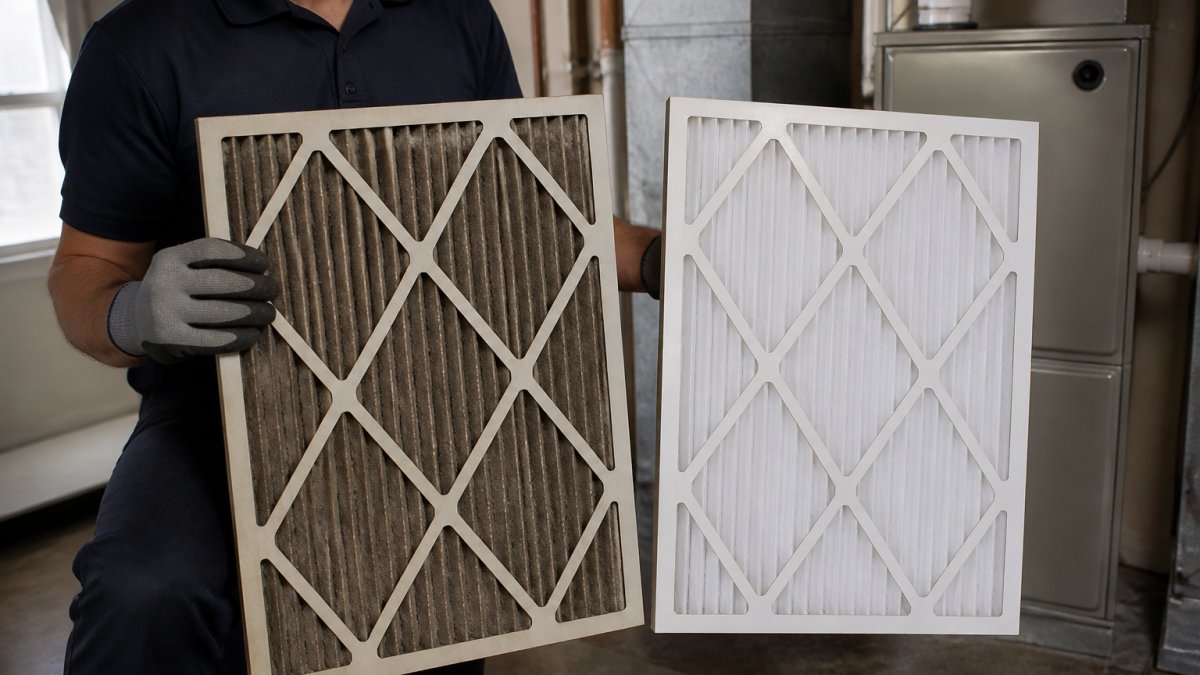
Your furnace filter is your first line of defense against indoor air pollution. Most homeowners replace filters once or twice yearly, a mistake that costs them cleaner air and higher energy bills.
Start by checking your current filter's MERV rating. MERV stands for Minimum Efficiency Reporting Value, a scale from 1 to 16 that measures a filter's ability to capture particles. Standard filters rated MERV 4-8 trap larger particles but let smaller irritants through.
Replace your filter every 30-60 days if you have pets, allergies, or live in a dusty area. Homes without pets or smokers can extend to 90 days, but check the filter visually, if it looks gray or clogged, replace it immediately.
Step 2: Improve Air Quality in Your Home Naturally Through Ventilation
Fresh outdoor air is your most underutilized tool for improving indoor air quality. Ventilation works by exchanging stale indoor air with fresh outdoor air, diluting pollutants and moisture. Many homes are built so tightly sealed for energy efficiency that they trap pollutants inside.
Start with simple ventilation habits. Open windows for 15-20 minutes daily when outdoor air is cleaner (typically early morning or evening, not during peak pollen hours). These fans directly remove humidity, cooking odors, and airborne particles before they settle throughout your home.
If your HVAC system has a fresh air intake, verify it's open and unobstructed. Many systems include dampers that can be adjusted to increase outdoor air exchange.
For homes in humid climates like Houston, ventilation prevents moisture from accumulating. Excess humidity creates conditions where mold thrives and dust mites multiply. Good air circulation keeps humidity levels between 30-50%, the zone where most pollutants and allergens are least problematic.
Step 3: Choose the Best Air Purifier for Your Home
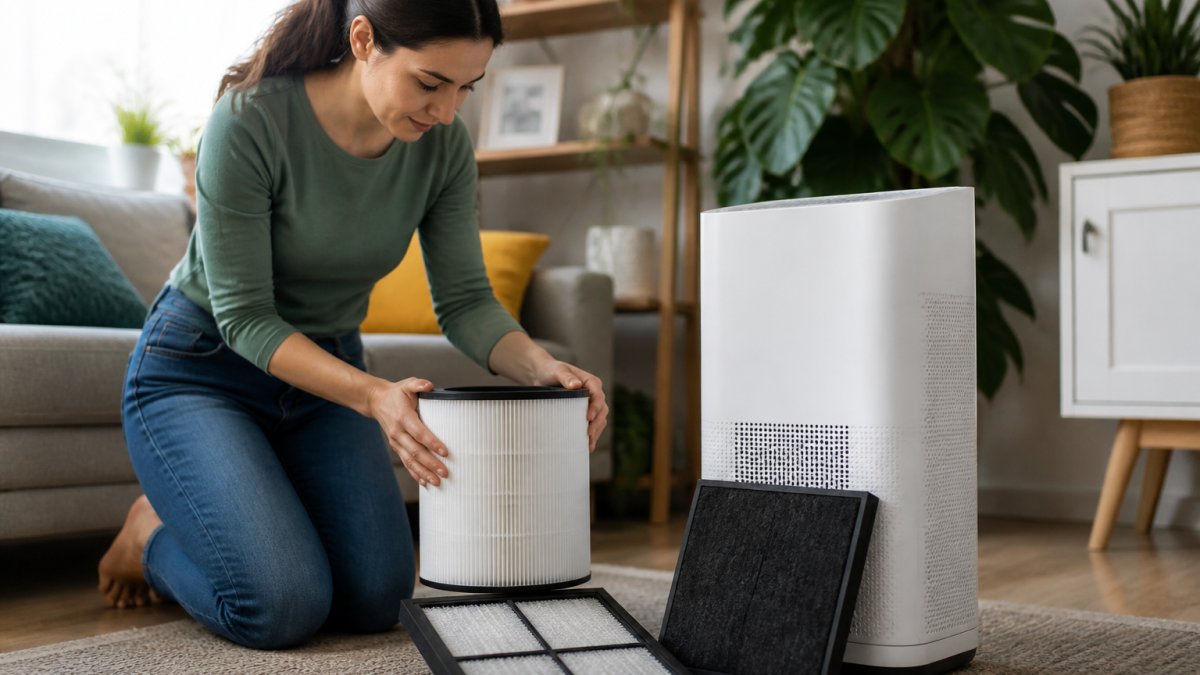
An air purifier captures particles your HVAC filter misses, targeting specific pollutants in individual rooms. Not all purifiers work equally, choosing the right one for your space and budget makes the difference between a useful tool and an expensive decoration.
HEPA filtration is the gold standard for home air purifiers. HEPA filters remove 99.97% of particles as small as 0.3 microns, capturing pollen, dust, pet dander, and fine particulate matter (the EPA). If you have allergies or asthma, a HEPA purifier in your bedroom delivers measurable relief.
Size matters more than you'd think. An air purifier's effectiveness depends on its Clean Air Delivery Rate (CADR), which measures how many cubic feet of air it cleans per minute. For a bedroom, you need a purifier rated for that room's square footage.
Placement affects performance significantly. Position your purifier centrally in the room with at least 12 inches of clear space around it. Avoid corners or enclosed spaces where air circulation is restricted. Run it continuously or at least 8 hours daily for best results.
Step 4: Control Humidity and Prevent Mold Growth
Humidity and mold are interconnected problems. Excess moisture creates the environment where mold grows, and mold releases spores that degrade indoor air quality. Maintaining proper humidity levels prevents both issues and reduces dust mite populations.
Indoor humidity should stay between 30-50%. Below 30%, your respiratory system dries out and you become more susceptible to colds. Above 50%, mold and dust mites thrive. In Houston's humid climate, keeping humidity controlled requires active management. Run your HVAC system's dehumidification mode during summer months.
Bathrooms and basements are humidity hotspots. Ensure exhaust fans are vented to the outdoors, not into your attic. Run them during and after showers, and keep bathroom doors closed to contain moisture.
If your home consistently stays above 50% humidity despite running your HVAC system, you may need a whole-home dehumidifier or an upgrade to your HVAC system's dehumidification capacity. Elisee AC Services LLC can measure your home's humidity levels and recommend solutions tailored to your specific conditions.
Step 5: Reduce Indoor Pollution Sources and Chemical Emissions
Your home contains numerous sources of indoor pollutants. Cleaning products, air fresheners, paint, new furniture, and tobacco smoke all emit volatile organic compounds (VOCs) that degrade air quality. Reducing these sources at the point of origin is more effective than trying to filter them out afterward.
Switch to low-VOC or natural cleaning products. Vinegar and baking soda clean effectively without chemical emissions. Many conventional cleaners release harmful fumes that linger in your home for hours.
New furniture, carpet, and paint off-gas VOCs for weeks after installation. When possible, air out new items in a garage or outdoors before bringing them inside. If you're painting, use low-VOC paint and ventilate thoroughly during and after application. Open windows and run exhaust fans to remove fumes.
Scented candles and incense also contribute to indoor air pollution. The smoke and fragrance compounds they release can trigger respiratory issues and allergies. If you want pleasant scents, open windows for fresh air or use unscented diffusers with essential oils in well-ventilated areas.
Step 6: Clean Floors, Carpets, and Rugs Regularly
Dust, pet dander, pollen, and fine particles settle on floors and carpets, becoming airborne again with foot traffic. Regular cleaning removes these pollutants before they accumulate and recirculate through your home.
Vacuum carpets and rugs at least twice weekly, more often if you have pets. Use a vacuum with a HEPA filter to prevent dust from escaping back into the air.
Dust surfaces weekly with a damp cloth, not a dry duster. Dry dusting spreads particles into the air; damp cloths trap them.
Consider reducing carpet in high-traffic areas. Hard flooring (tile, vinyl, wood) is easier to keep clean and doesn't harbor dust mites or pet dander the way carpet does.
Improving indoor air quality doesn't require expensive equipment or major renovations. These six steps address the root causes of poor air: inadequate filtration, stale air, excess moisture, chemical emissions, and accumulated dust.
Your HVAC system is the foundation of your home's air quality.
| Action | Frequency | Expected Impact |
|---|---|---|
| Replace furnace filter | Every 30-90 days | Improved circulation, cleaner air |
| Open windows | Daily (15-20 min) | Fresh air exchange, reduced staleness |
| Run exhaust fans | During/after showers and cooking | Reduced humidity and odors |
| Vacuum with HEPA filter | 2+ times weekly | Removed dust and allergens |
| Mop hard floors | Weekly | Trapped dust and particles |
| Check humidity levels | Monthly | Mold and dust mite prevention |
| Replace air purifier filters | Every 6-12 months | Sustained pollutant removal |
Frequently Asked Questions
What are the signs of poor indoor air quality?
Common signs include persistent headaches, fatigue, difficulty concentrating, and respiratory irritation like coughing or sneezing. Musty odors, visible dust accumulation, and increased allergy symptoms also indicate poor air quality. If multiple household members experience these symptoms indoors but feel better outside, your indoor air likely needs improvement. Moisture problems and mold growth are additional red flags.
How often should I change my HVAC air filter?
Most standard furnace filters need replacement every 1-3 months, depending on filter type, household size, and pets. Homes with pets or allergy sufferers should check filters monthly and replace every 4-6 weeks. HEPA filters last longer, typically 6-12 months. Check your filter monthly by holding it up to light, if you can't see through it, replace it immediately. A clogged filter reduces air circulation and worsens indoor air quality.
How can I improve air quality in my home naturally without an air purifier?
Open windows and doors daily to bring in fresh outdoor air and improve ventilation, even for 15-20 minutes. Remove indoor pollution sources like harsh cleaning products and opt for low-VOC alternatives. Using houseplants can help absorb some volatile organic compounds. Reduce humidity to prevent mold, vacuum carpets and rugs weekly, and mop hard floors regularly. Maintain your HVAC system and ensure air ducts are clean to maximize natural air circulation.
Do air purifiers actually help improve indoor air quality?
Yes, quality air purifiers with HEPA filters remove fine particles, dust, pollen, and pet dander from the air. However, they work best alongside other strategies like ventilation, source control, and regular cleaning. A HEPA filter can capture 99.97% of particles 0.3 microns and larger. For best results, choose a purifier sized for your room's square footage and run it continuously in high-traffic areas or bedrooms. They cannot eliminate chemical emissions or control humidity.
How can I reduce humidity and prevent mold indoors?
Keep indoor humidity between 30-50% using a dehumidifier or by improving ventilation in moisture-prone areas like bathrooms and kitchens. Run exhaust fans during and after showers and cooking. Fix any water leaks promptly and ensure gutters drain away from your home's foundation. Use air conditioning to reduce moisture during humid months. Proper HVAC maintenance and air circulation help prevent moisture buildup that leads to mold growth and poor air quality.
What makes the best air purifier for home use?
The best air purifier for your home has a true HEPA filter, appropriate Clean Air Delivery Rate (CADR) for your room size, and low noise levels. Calculate your room's square footage and choose a purifier rated for that area. Look for models with activated carbon filters if you need to remove odors and chemical emissions. Consider noise levels if placing it in a bedroom. Regular filter replacement is essential, budget for ongoing maintenance costs. Professional HVAC technicians can recommend models suited to your home's specific air quality challenges.
When should I seek professional help for indoor air quality problems?
Contact a professional HVAC technician if you suspect mold growth, experience persistent odors despite cleaning, or notice recurring respiratory issues. Professionals can test indoor air quality, inspect HVAC systems for contamination, clean air ducts, and diagnose hidden moisture problems. If standard measures don't improve symptoms after 2-3 weeks, or if you suspect your HVAC system is contributing to poor air quality, professional assessment is worthwhile. Licensed technicians can also recommend equipment upgrades and maintenance plans tailored to your home.