 how-to
AC Repair Services Houston: 2026 Troubleshooting Guide
Table of Contents
- When Your AC Fails: First Steps Before You Call for Repair
- Air Conditioner Troubleshooting: 6 Checks Homeowners Can Do Safely
- Houston AC Repair Cost: What Affects Your Estimate
- AC Repair or Replacement: A Decision Framework for Older Units
- AC Repair Service Questions to Ask Before You Book
- Choosing a Qualified AC Repair Technician in Houston
- Conclusion: Get Your Cooling System Back Online
- Frequently Asked Questions
Last Updated: October 5, 2026
When Your AC Fails: First Steps Before You Call for Repair
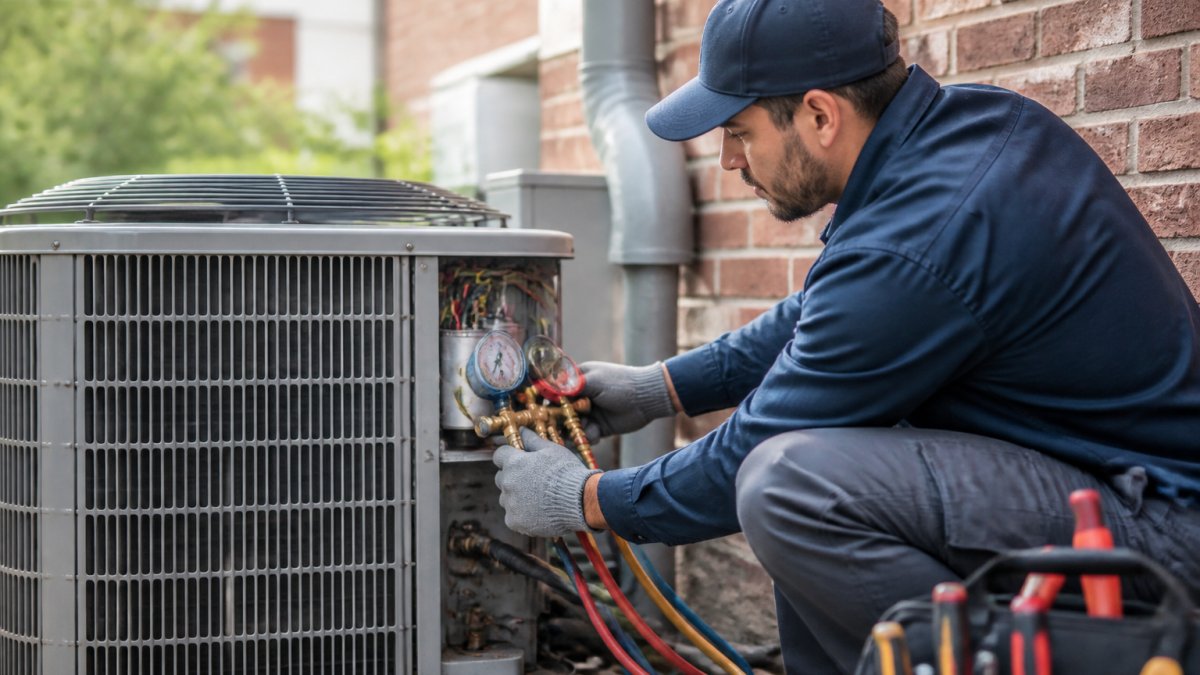
When your air conditioner quits during a Houston heatwave, the first hour of ac repair houston matters. Before you panic-dial a contractor, there are a few safe checks that can either solve the problem in minutes or tell you exactly what to report when you book air conditioning repair services in Houston. This guide from Elisee AC Services LLC walks through what you can safely do yourself, what a professional diagnostic visit actually involves, and how to decide between repairing and replacing an aging unit.
Start with the thermostat. A dead display often means a tripped breaker, not a failed compressor. Check your electrical panel for a tripped switch, then confirm the thermostat is set to "cool" and the fan is on "auto." If the outdoor unit hums but the indoor vents blow warm air, you likely have a refrigerant or compressor issue that no homeowner should touch.
The U.S. Department of Energy cooling systems guide recommends keeping outdoor condenser coils clear of debris and vegetation, since restricted airflow forces the system to work harder and can trigger shutdowns.
Air conditioner troubleshooting is the process of safely identifying why a cooling system stopped working before involving a technician. It covers thermostat settings, power supply, airflow, and visible component condition. Knowing these basics helps you avoid unnecessary service calls and gives your technician a head start.
Safety Warnings and Signs You Need Urgent Professional Service
Some symptoms mean stop and call a licensed technician immediately. If you smell burning, see sparks, hear loud grinding or banging from the outdoor unit, or notice water pooling around the indoor air handler, shut the system off at the thermostat and call for emergency service. These point to electrical faults, a failing compressor, or a blocked condensate line that can cause water damage.
Never open the outdoor unit's electrical panel or handle refrigerant lines yourself. Refrigerant systems operate under high pressure, and improper handling is both dangerous and illegal without proper certification.
Air Conditioner Troubleshooting: 6 Checks Homeowners Can Do Safely
These six checks cover the most common causes of a non-cooling system. Work through them in order before you book a service call.
- Thermostat settings and batteries. Confirm it is set to "cool" and the temperature is below room temperature. Replace dead batteries.
- Air filter. A clogged filter restricts airflow and can freeze the indoor coil. Replace it if it looks gray or matted.
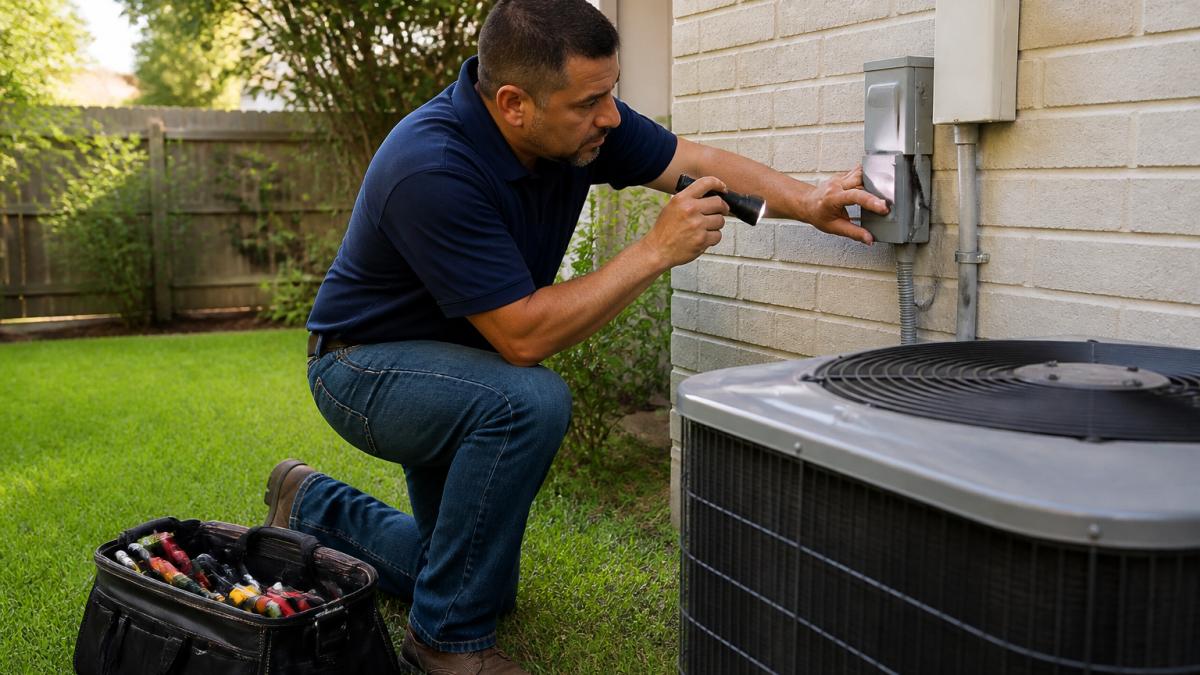
- Breaker and disconnect. Check the panel and the outdoor disconnect box for a tripped switch.
- Outdoor unit clearance. Clear leaves, grass, and debris within a couple of feet of the condenser.
- Condensate drain line. A clogged drain triggers a safety shutoff on many systems. Look for standing water near the indoor unit.
- Visible damage. Inspect for bent fan blades, obvious ice buildup, or loose panels.
If all six check out and the system still will not cool, the problem is likely internal and needs a professional.
What Happens During a Professional Diagnostic Visit
A diagnostic visit starts with a full system inspection, not a guess. The technician checks refrigerant pressures, electrical connections, capacitor and compressor function, airflow, and thermostat calibration. Most reputable companies charge a diagnostic fee that is often credited toward the repair if you approve the work.
Ask what the diagnostic fee covers before booking. A transparent provider explains the fee upfront and gives you a written repair estimate before starting any work.
Houston AC Repair Cost: What Affects Your Estimate
Houston AC repair cost is one of the first things homeowners ask about, and it is also the hardest to answer with a single number.
A repair bill is usually three parts: the diagnostic or service-call fee, the labor to perform the repair, and the parts. Some companies bundle all three into one flat repair price; others itemize. Neither approach is wrong, but you should know which one you are getting before the technician starts.
| Cost factor | What pushes it lower | What pushes it higher |
|---|---|---|
| Failed component | Capacitor, contactor, thermostat, run capacitor | Compressor, condenser coil, evaporator coil, blower motor |
| Refrigerant type | Standard current refrigerant | R-22, which is phased out and increasingly expensive to source |
| Timing | Standard weekday appointment | Evening, weekend, or holiday emergency call |
| Access | Ground-level outdoor unit, clear attic path | Rooftop unit, tight attic, crawlspace, or unit behind fencing |
| System age | Newer system with available parts | Older system where parts must be ordered or retrofitted |
| Diagnosis clarity | Obvious single failure | Intermittent fault requiring repeat visits |
A few patterns are worth knowing. Capacitor and contactor failures are among the most common no-cool calls and sit at the low end of repair pricing because the part is inexpensive and the labor is short.
Diagnostic fees vary by company and by market. A common pattern is a flat service-call fee that covers the trip and the initial inspection, with the repair quoted separately. Many providers credit that fee toward the repair if you approve the work, which effectively makes the inspection free when you move forward.
Be cautious with any quote given over the phone before a technician has seen the system. A responsible provider can give you a range and a diagnostic fee, but a firm repair price without inspection is usually a guess or a sales tactic. The written estimate should list the part, the labor, the refrigerant if any, and the warranty on the repair. If a quote is verbal only, ask for it in writing before work begins.
For current pricing on your specific system, request a written estimate after the diagnostic. We do not publish flat rates because the honest answer depends on what is actually wrong with your equipment.
AC Repair or Replacement: A Decision Framework for Older Units
The repair-versus-replacement decision comes down to four questions: How old is the unit, how often has it failed, what is the repair cost relative to a new system, and how well does the current system actually cool your home?
Start with the age and the refrigerant. Systems generally have an expected service life in the range of 10 to 15 years, though runtime, maintenance history, and installation quality move that number in both directions. The U.S. Environmental Protection Agency refrigerant phaseout information explains why R-22 systems are increasingly expensive to service.
Use this framework:
- Under 10 years old, first major failure: Repair. The system has life left, and the repair is usually the better financial call.
- 10-15 years old, second repair in two years: Weigh the repair cost against a new high-efficiency system. Two repairs in two years is a pattern, not bad luck.
- 15+ years old, R-22 refrigerant, major failure: Replacement is usually the smarter long-term call, since R-22 is phased out and repairs get costly.
- Any age, compressor or coil failure: Get a replacement quote alongside the repair quote so you can compare real numbers instead of guessing.
A common rule of thumb is the $5,000 test: if the repair costs more than a third of what a new system would cost, and the unit is past the midpoint of its expected life, replacement usually wins on total cost of ownership. Treat that as a starting point, not a verdict. A newer system with a single failed capacitor is a repair no matter what the ratio says.
There are also non-cost signals that point toward replacement. If some rooms never get comfortable no matter how long the system runs, the equipment may be undersized or the ductwork may be the real problem, and replacing the condenser alone will not fix it. If your energy bills have climbed year over year with no change in usage, declining efficiency is part of the story.
If you do replace, ask about efficiency ratings and whether the new system qualifies for any federal tax credits or utility rebates available in your area. Those programs change, so confirm current eligibility before you buy. And ask whether the ductwork and thermostat are compatible with the new equipment, because a high-efficiency system on undersized ducts will not deliver the savings it promises.
AC Repair Service Questions to Ask Before You Book
AC repair service questions protect you from surprise charges and unqualified technicians. Ask them before you confirm an appointment, not after the truck arrives.
- Are your technicians licensed and insured?
- Is the diagnostic fee disclosed upfront, and is it credited toward the repair?
- Will I get a written estimate before work begins?
- Do you offer same-day, weekend, or emergency service?
- What warranty covers the repair and parts?
A provider who hesitates on any of these is a red flag. Straight answers cost nothing.
Choosing a Qualified AC Repair Technician in Houston
Finding a qualified technician for ac repair houston is the difference between a lasting fix and a repeat problem. Look for a licensed, insured local company with verifiable reviews and clear communication. A family-owned operation that serves your neighborhood has a reputation to protect and is more likely to stand behind its work.
For property managers and business owners, ask whether the company handles commercial HVAC and refrigeration equipment, including walk-in coolers, walk-in freezers, and ice machines. Not every residential-focused shop does. Elisee AC Services LLC serves both residential HVAC and commercial systems across the Greater Houston area, including Cypress, Katy, Tomball, and Spring.
Conclusion: Get Your Cooling System Back Online
A failed AC in Houston heat is not something to wait out. Run the safe checks, know the warning signs that demand urgent help, and ask the right questions before you book.
When you need reliable air conditioning repair services in Houston, Elisee AC Services LLC is ready. Our licensed technicians diagnose all major brands, offer emergency service, and back every repair with fair, transparent pricing. Maintenance members get priority scheduling and lower energy bills through annual preventative care.
Get started with Elisee AC Services LLC and restore your home comfort today.
Frequently Asked Questions
How much does it cost to repair an AC in Houston?
Repair costs depend on the problem, parts needed, and system type. Common fixes like capacitors or fan motors cost less than compressor or refrigerant leak repairs. Elisee AC Services LLC provides written estimates before work begins. Factors include diagnostic fees, labor rates, and whether the unit uses older R-22 refrigerant. Request a quote for your specific situation.
What should I check before calling an AC repair technician?
Check your thermostat batteries and settings, replace the air filter if dirty, verify the circuit breaker has not tripped, and confirm the outdoor unit is clear of debris. If the system still blows warm air or won't turn on after these steps, call a licensed technician. These air conditioner troubleshooting steps save time and help your tech diagnose faster.
How do I know if my air conditioner needs repair or replacement?
Consider the age of your unit, repair frequency, and refrigerant type. If your system is over 10-12 years old, uses R-22, or has needed multiple repairs in two years, replacement often makes more financial sense. For newer units with a single failed component, repair is usually the better choice. A technician can help you compare long-term costs.
What should I ask an HVAC company before scheduling AC repair?
Ask whether technicians are licensed and insured, if the company provides written estimates, what the diagnostic fee covers, and whether emergency service is available. Also ask about warranty on parts and labor. These AC repair service questions to ask protect you from surprise charges and unqualified providers.